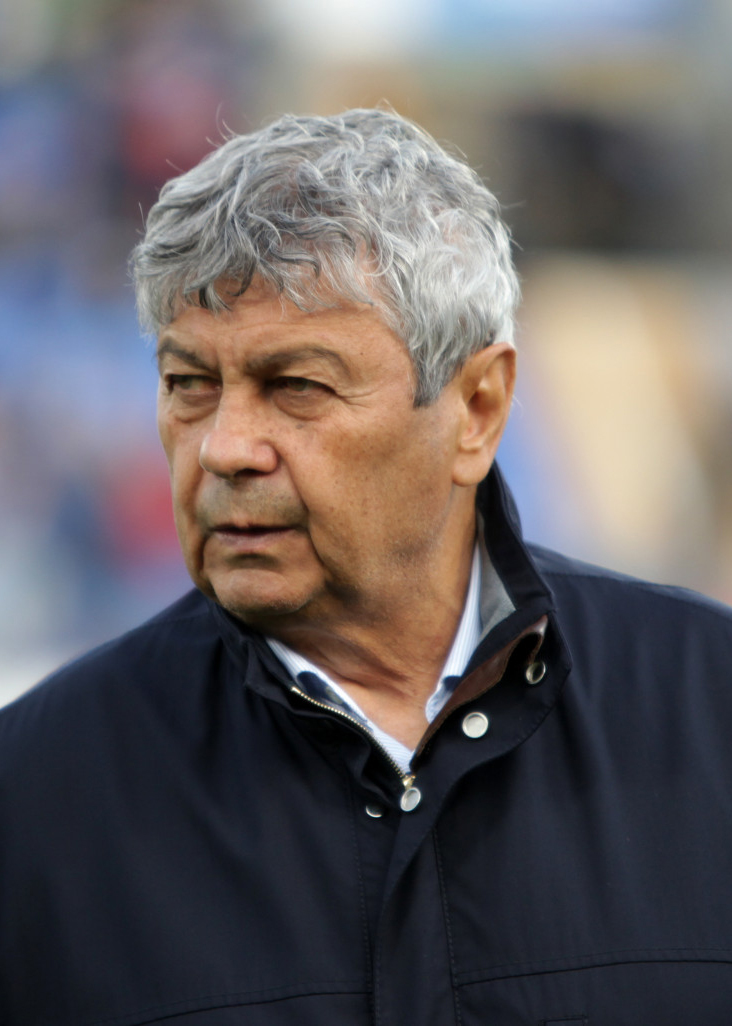
Mircea Lucescu's Legacy: Mentoring Stars and Redefining Coaching
The football world recently mourned the passing of Mircea Lucescu at the age of 80, marking the end of an era for one of the game's true intellectuals. While his impressive trophy cabinet places him as the third most decorated coach of all time, his true legacy transcends silverware. Lucescu will be forever remembered not just for his victories, but for his profound belief that culture and intellectual development were the ultimate vehicles for footballing excellence. This deep dive into Mircea Lucescu's remarkable Mircea Lucescu Biografie reveals a man who saw the pitch as a canvas and his players as artists, shaping not only their careers but also their lives.
From nurturing prodigious young talents to challenging conventional coaching wisdom, Lucescu’s approach was holistic and visionary. He fostered an environment where learning was as crucial as training, where books were as important as tactics, and where understanding the world enriched a player's game. His influence is still palpable in the careers of many stars he mentored, embodying a philosophy that continues to inspire. This article explores the unique tenets of his coaching philosophy and the enduring impact of a gentleman and innovator who truly redefined what it means to be a football coach.
The Cultural Architect: More Than Just a Coach
Mircea Lucescu was a polyglot, fluent in an astonishing seven languages, a testament to his insatiable curiosity and commitment to understanding diverse cultures. This personal trait profoundly influenced his coaching methodology. For Lucescu, football was not merely a sport but a complex cultural phenomenon, and he actively encouraged his players to embrace this perspective. He famously pushed his squad members to read, study, and engage with the arts, believing that intellectual stimulation outside the confines of the training ground would directly translate to improved performance on the pitch.
One of his most distinctive practices involved transforming traditional away trip rituals. Instead of confining players to isolated hotel rooms, Lucescu would lead them on excursions to museums, art galleries, and historical sites in the host cities. He believed that exposing his players to different cultures, histories, and artistic expressions would broaden their horizons, sharpen their minds, and cultivate a deeper understanding of the world. This approach wasn't just about personal growth; Lucescu theorized that a culturally enriched player would possess greater tactical awareness, enhanced problem-solving skills, and superior adaptability on the field. The ability to quickly grasp new concepts, communicate effectively in various contexts, and think creatively under pressure were, for him, direct benefits of intellectual and cultural expansion. It was an audacious strategy that flew in the face of conventional, often insular, coaching wisdom, yet it yielded remarkable results.
A Nursery for Stars: Lucescu's Mentorship Model
Perhaps one of the most enduring aspects of Mircea Lucescu's Biography is his unparalleled ability to identify and nurture young talent. He possessed a unique intuition for spotting potential, coupled with the patience and pedagogical skill to transform raw ability into world-class performance. His focus was never just on a player's athletic prowess but on their holistic development, both as athletes and as individuals. Among the many stars he launched, Cristian Chivu and Henrikh Mkhitaryan stand out as prime examples of his transformative influence.
Mkhitaryan, who was famously launched by Lucescu at Shakhtar Donetsk, offered a particularly poignant tribute upon his mentor's passing: “Mister, you were one of my very first coaches, the one who gave me the opportunity to grow and start my international career. I will always be grateful to you for giving me the chance to live what I had dreamed of since I was a boy. Thank you for your guidance, your trust, and for contributing to shaping the player and the person I am today.” This heartfelt statement encapsulates the essence of Lucescu’s mentorship: it was about belief, opportunity, and comprehensive development. He instilled confidence, encouraged self-expression, and fostered a deep sense of responsibility in his proteges. His legacy is etched not just in the records he broke, but in the careers he built and the lives he touched, shaping individuals who became ambassadors for his unique blend of football and culture.
Tactical Vision: The Art of Technique and Proactive Play
Beyond his cultural pedagogy, Lucescu was also a tactical innovator whose coaching philosophy centered on technical precision and a proactive, non-dogmatic approach to the game. His teams were renowned for their fluid, attacking style, built on individual skill and collective understanding. He didn't believe in rigid systems that stifled creativity; instead, he encouraged players to express themselves within a structured framework, prioritizing technique as the cornerstone of all tactical execution.
Lucescu's concept of "proposta" – a proactive, front-foot approach – meant his teams aimed to dictate play, not merely react to opponents. This required players who were not only technically proficient but also intelligent and adaptable. This tactical vision was intrinsically linked to his cultural philosophy: a player who could think critically, understand nuances, and adapt to diverse situations off the field was better equipped to execute complex tactical demands on it. By fostering an environment where players were encouraged to think and create, Lucescu built teams that were not just disciplined but also dynamic and exciting to watch, always pushing the boundaries of what was possible through skill and intelligence rather than brute force.
The Interlude: A Glimpse of Unfulfilled Potential at Inter
While Lucescu's career was marked by numerous successes, not all his stints were universally understood or appreciated at the time. His brief tenure at Inter Milan between 1998 and 1999 serves as a compelling, albeit short, chapter in his extensive Mircea Lucescu Biografie. Lasting only three months, it ended not with dismissal but with his own resignation, reportedly due to a disconnect within the dressing room that struggled to embrace his progressive and comprehensive ideas.
This episode highlights the challenges faced by truly visionary leaders whose ideas are ahead of their time. Lucescu’s emphasis on intellectual growth, cultural immersion, and a nuanced, non-dogmatic tactical approach likely clashed with more traditional mindsets prevalent in some footballing environments. In an era often dominated by direct, results-driven coaching, his holistic philosophy may have been perceived as unconventional or even unnecessary by some players accustomed to a different methodology. His resignation, therefore, wasn't a failure of his principles, but perhaps an indication that the specific conditions at Inter at that moment were not conducive to the full implementation of his unique vision. It underscores the reality that even the most brilliant strategies require a receptive environment to truly flourish.
The Enduring Legacy of a Gentleman and Visionary
Mircea Lucescu's passing leaves an irreplaceable void in the world of football, yet his indelible mark on the sport will resonate for generations. He was more than just a coach; he was an educator, a mentor, and a cultural ambassador who championed the idea that football could be a vehicle for personal and intellectual enrichment. His biography is a testament to the power of a unique vision, one that saw beyond the immediate game and into the broader landscape of human potential.
From the touchlines of Eastern Europe to the grand stages of the Champions League, Lucescu inspired countless players to not only master their craft but also to expand their minds. His legacy is a powerful reminder that true coaching involves shaping the entire person, not just the athlete. As the football community reflects on his extraordinary life and career, there is a collective hope that his profound principles – particularly his belief in nurturing young talent and integrating culture into the game – will continue to be embraced. The sentiment that Cristian Chivu might pick up his torch is a beacon of hope, suggesting that Mircea Lucescu’s visionary approach to football, culture, and mentorship will continue to inspire the sport’s future leaders.